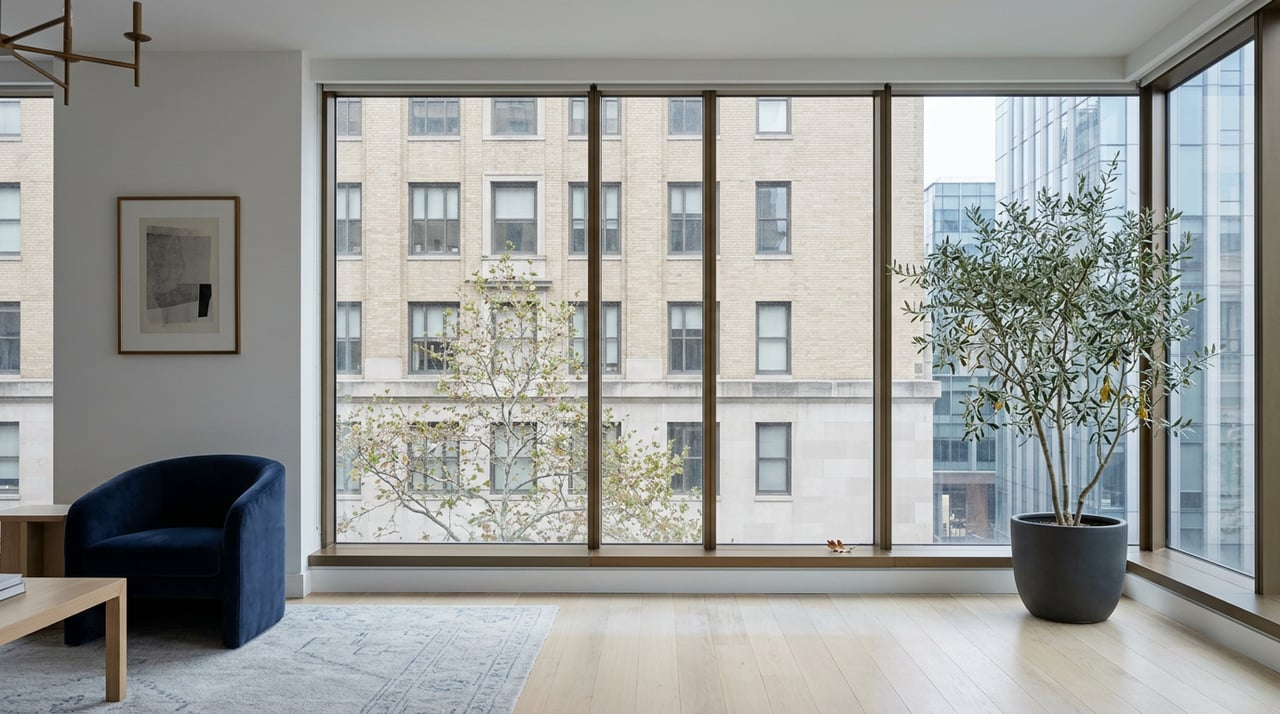
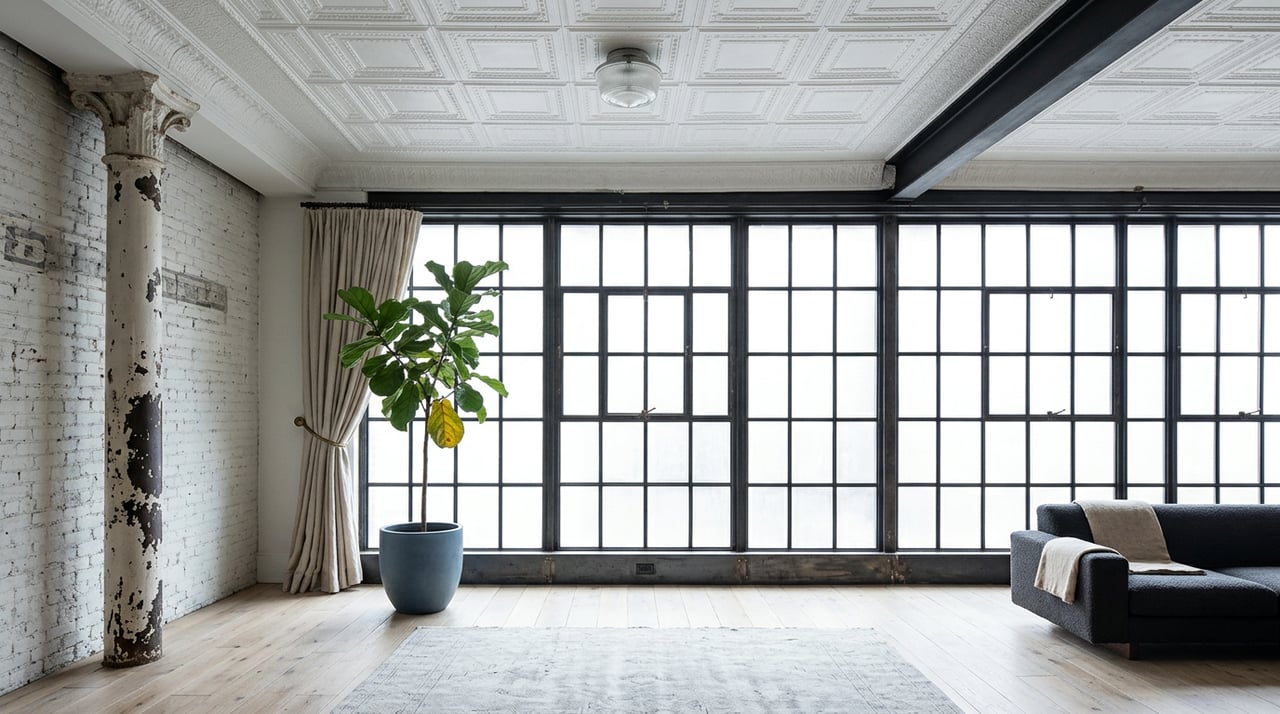
Why would two cast-iron lofts on the same SoHo block, both listed in the low seven figures, both with the same soaring ceilings and the same cobblestone view, close on completely different schedules? One buyer signs, gets a mortgage commitment in three weeks, and moves in before the movers finish the second trip. The other buyer, offering a similar price for a similar space, spends four months waiting on an architect, a filing with the City Planning Commission, and a wire transfer to something called the SoHo-NoHo Arts Fund.
The difference has nothing to do with the kitchen or the light. It is sitting in a document neither buyer has probably read: the building's Certificate of Occupancy.
Three Lofts, Three Legal Identities
SoHo is one of the only places in Manhattan where a residence can be, on paper, something other than a residence. The neighborhood's M1-5A and M1-5B zoning districts were built for manufacturing, and the only reason people live there at all is a 1970s carve-out that let certified artists occupy former factory floors as Joint Living-Work Quarters for Artists, or JLWQA. Decades later, that designation still governs a meaningful share of SoHo's loft stock, and it splits into three distinct legal categories that a buyer needs to tell apart before writing an offer.
A unit can still carry its original JLWQA status, meaning occupancy is technically limited to a Department of Cultural Affairs certified artist or a permanent resident who moved in on or before December 15, 2021, the date the SoHo/NoHo rezoning took effect. A unit can be a Loft Law Interim Multiple Dwelling, working its way toward a standard residential Certificate of Occupancy under the Loft Board's jurisdiction, a track that carries no artist requirement at all. Or a unit can have already completed conversion to ordinary residential use, filed under Use Group 2, with no restrictions left to navigate.
These three categories can sit inside the same building. They can look identical from the listing photos. And they carry very different costs.
The Fee That Was Theoretical Until January
For years, converting a JLWQA loft to unrestricted residential use existed on paper but not in practice. The path required a one-time, non-refundable payment to the SoHo-NoHo Arts Fund, calculated at $100 per square foot of converted floor area, plus certification from the City Planning Commission chair and a new Certificate of Occupancy from the Department of Buildings. A coalition of SoHo and NoHo residents challenged the fee, and the legal status of the entire conversion path stayed unsettled while the case moved through the courts.
On January 13, 2026, the New York Court of Appeals ended that uncertainty. The court reversed a lower appellate ruling and upheld the Arts Fund fee, clearing the way for JLWQA owners, including condo and co-op boards, to move forward with conversions they had been holding off on for years.
That ruling changes what a buyer is actually pricing when they look at a JLWQA loft in 2026. Before January, the cost of fixing a unit's legal status was a legal maybe. Now it is a known number. A 1,800 square foot loft that needs to convert carries a $180,000 Arts Fund contribution before any code work or filing fees are added. A 2,500 square foot loft carries $250,000. That is not a renovation budget. It is the price of turning a legally ambiguous home into an ordinary one, and it belongs in the offer math the same way a co-op's flip tax or a condo's transfer fee does.
What Each Status Actually Costs at the Closing Table
The legal category on the Certificate of Occupancy shapes financing before it shapes anything else.
| CO status | Who can legally occupy it | What a lender typically wants | What it costs to resolve |
|---|---|---|---|
| JLWQA (Use Group 17D) | A DCLA certified artist, or a permanent occupant who moved in on or before December 15, 2021 | A larger down payment, and sometimes a portfolio lender rather than a national bank | $100 per square foot to the Arts Fund, plus code work and DOB filing fees, to convert to Use Group 2 |
| Loft Law Interim Multiple Dwelling | Any resident, while the Loft Board process runs | Underwriting tied to how far the building has progressed toward a final Certificate of Occupancy | No Arts Fund fee, since IMDs are exempt, but the final CO can take years to arrive |
| Converted Use Group 2 residential | Anyone | Standard underwriting once the CO is on file | Already paid, and already reflected in the asking price |
National banks tend to be cautious about writing conventional mortgages against a unit that does not carry a standard residential Certificate of Occupancy, which pushes some JLWQA buyers toward smaller portfolio lenders and larger cash contributions up front. That friction is invisible on a listing sheet. It shows up the week a buyer's loan officer asks for the building's CO and gets back a document that says Res-JLWQA instead of a plain residential classification.
The conversion itself can be filed unit by unit rather than requiring the whole building to convert at once, which is useful information if you are the only owner in a building who wants clean residential status while your neighbors are content to stay JLWQA. But unit by unit does not mean fast. Each conversion still needs its own Chairperson certification, its own Arts Fund payment, and its own amended CO from the Department of Buildings.
Why the Inventory of JLWQA Lofts Is a Shrinking, Not Static, Pool
Here is the part that matters if you are trying to time a purchase. New JLWQA designations effectively stopped when the SoHo/NoHo rezoning took effect in December 2021. The category still exists for units that already had it, but no building can create a new one. That means every conversion that happens from here forward permanently shrinks the pool of JLWQA-status lofts and grows the pool of unrestricted residential ones.
For a buyer, that cuts two ways. A JLWQA loft priced below a comparable converted unit is not necessarily a discount. It may simply be a unit where the seller has decided the $100 per square foot conversion cost is the buyer's problem to solve, priced into the gap between the two. Meanwhile, a seller who already converted their unit before listing it is asking the buyer to pay for a cost that has already been absorbed, which is a very different negotiation than a below-market price with an open legal question attached.
The honest read on any SoHo loft listing this year is to ask which of those two situations you are looking at before you compare it to the unit down the block.
What This Means If You're Also Looking at Tribeca
Buyers comparing SoHo to Tribeca sometimes assume the loft-buying experience is interchangeable between the two neighborhoods. It is not, and the JLWQA framework is the reason why. The M1-5A and M1-5B zoning districts that created the artist-certification requirement exist only in SoHo and NoHo. Tribeca's manufacturing-to-residential conversions run through a different framework entirely, the Special Tribeca Mixed Use District, which governs residential conversion without an artist-certification layer attached to it.
That does not make Tribeca simpler across the board. It has its own landmark and zoning considerations. But it does mean a Tribeca loft that looks and feels like its SoHo counterpart is not carrying the same legal-status spectrum, and a buyer comparing the two neighborhoods on price alone is comparing two different risk profiles without realizing it.
A Short Due Diligence List Before You Make an Offer
- Ask for the building's current Certificate of Occupancy, not just the listing description, and confirm whether the unit is listed as Res, J-2, or Use Group 17D
- If the unit is JLWQA, ask whether the seller or any current occupant holds DCLA artist certification, or moved in on or before December 15, 2021
- If the unit is an Interim Multiple Dwelling, ask the Loft Board for the building's registration history and where it stands in the legalization process
- If conversion is on the table, get a written estimate of the Arts Fund contribution based on the unit's square footage before you factor it into your offer
- Confirm with your lender early whether the building's current CO status affects your loan terms or down payment requirement
None of this shows up in a listing photo. All of it shows up at the closing table.
Quick Answers
Does the Arts Fund fee apply to units that already converted? No. The fee applies only to JLWQA units converting to unrestricted residential use going forward. A unit that completed its conversion before January 2026 already absorbed that cost.
Is a Loft Law IMD the same as a JLWQA unit? No. An IMD is a former commercial or manufacturing space working through the Loft Board's legalization process under Article 7-C of the Multiple Dwelling Law. It carries no artist-certification requirement and is exempt from the Arts Fund conversion process entirely.
Will JLWQA units eventually disappear from the market? The category cannot expand, since no new JLWQA designations are permitted under the 2021 rezoning, but existing JLWQA use can continue indefinitely for as long as an owner chooses not to convert.
A loft's charm is easy to see in a photo. Its legal status is not, and as of this January, that status now comes with an actual dollar figure attached. If you are comparing SoHo lofts, or comparing SoHo to a neighborhood like Tribeca, The Roya Cohen Team can walk through a specific building's Certificate of Occupancy with you before you write an offer. Request a complimentary market valuation and let's look at the paperwork together.