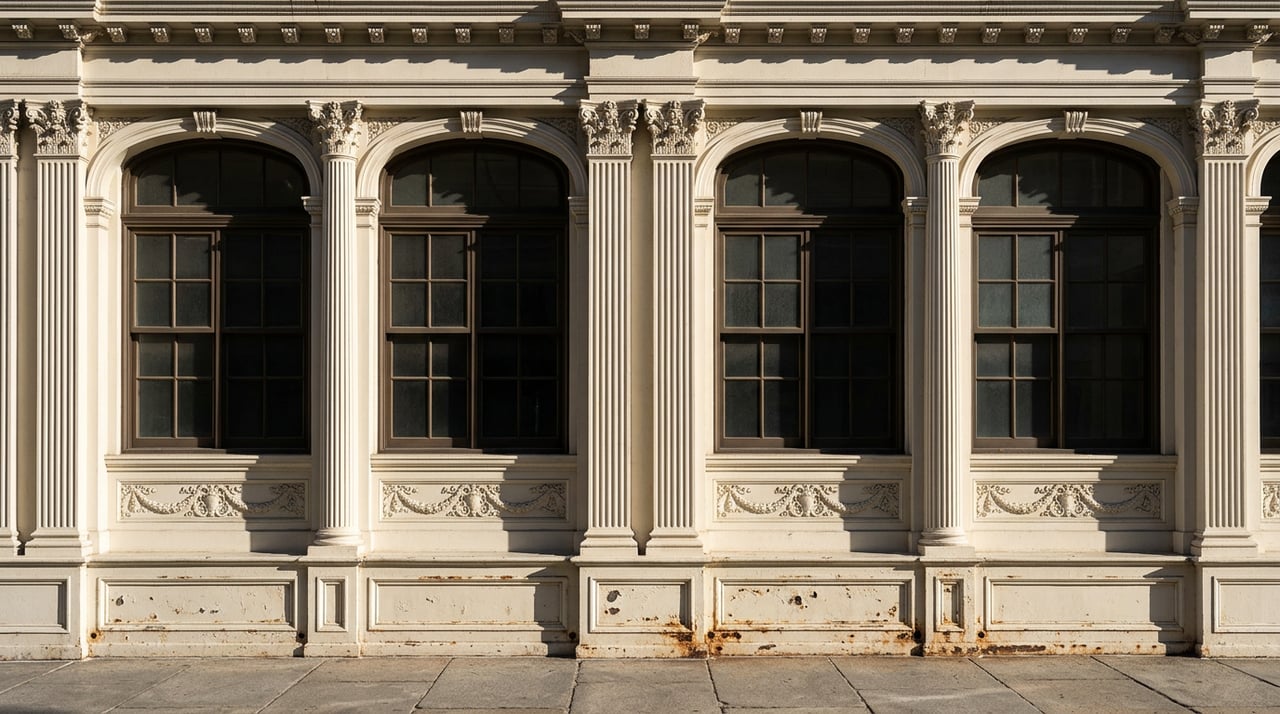
For a long time, the honest version of SoHo's dining scene was anchored by a short list of institutions: Balthazar on Spring Street, Raoul's on Prince, Fanelli's on the corner of Mercer and Wooster. They survived on their own longevity, surrounded by flagships selling things you could find in any city with a luxury corridor. For residents, the food was a known quantity. The list didn't change much, and the neighborhood's identity had more to do with cast-iron facades and cobblestone streets than with what any kitchen was actually doing on a given night.
Spring 2026 is ending that version of the story. The addresses that sat vacant or underperformed for years are filling up fast, and the operators choosing them are not doing so by accident. They are clustering on specific streets, after watching the neighborhood carefully. That pattern is worth paying attention to.
The Proof Point That Opened the Door
The Corner Store opened in SoHo in 2024 and, according to The Infatuation, "quickly became a painful reservation." Its follow-up concept from the same group, The Eighty Six, landed nearby and performed the same way. That back-to-back success mattered beyond the two restaurants themselves. It told every serious operator watching that SoHo could sustain destination dining, that the residents who live here would actually show up, repeatedly, in a neighborhood the industry had spent years writing off as tourist terrain with a few holdover classics.
The same group is now opening a third concept in SoHo: a Mediterranean restaurant built around live-fire cooking, in the former Principe space directly across the street from The Corner Store. The menu will include charred greens, seared salmon sashimi, and grilled whole lobster. Reservations are released on DoorDash seven days in advance, and the restaurant accepts limited walk-ins starting around 4 p.m. Three concepts, one group, one neighborhood. That is not a cautious market test. It is a commitment built on evidence.
Grand Street, Both Ends
The single address that defines this spring most clearly is 59 Grand Street. For more than thirty years it was home to Lucky Strike, Keith McNally's French-inspired bistro. Lucky Strike closed in April 2020 at the start of the pandemic and the space sat dormant for five years, long enough that it began to feel like one of those SoHo addresses that would cycle through concepts indefinitely without landing on anything that stuck.
This spring, Thomas Straker signed the lease. Straker runs Straker's in Notting Hill, a restaurant that holds a specific cultural position in London: well-reviewed, heavily followed on social media, known for charcoal cooking, seasonal flatbreads, and a style of food that is generous almost to the point of philosophy. After a sold-out pop-up run in New York in 2024, he spent months negotiating for the Grand Street space. Speaking to Time Out New York about the decision, he was direct about the weight of the address:
"We aim to do it justice and do ourselves justice by creating a space that really works."
The kitchen at Straker's NYC will cook over charcoal and feature a large pizza oven, mirroring the format that built the London reputation. It is opening into a space that has been quiet since the early months of the pandemic, on a street that is simultaneously becoming something else entirely.
Three blocks west, at 23 Grand Street inside ModernHaus SoHo, Selene by Kyma opened this spring as a three-story Greek restaurant with a retractable-roof atrium, a terrace, and multiple dining rooms. Team members from Scarpetta are involved in the project. Two restaurants, one street, both generating citywide conversation before either has been open long enough to collect a full season of reviews. Grand Street in the spring of 2026 is not the same block it was twelve months ago.
What Opened While You Were Looking at Grand Street
The activity this spring extends beyond Grand Street. Two other openings landed in the neighborhood recently, in different registers, with the same underlying conviction that SoHo residents are ready for something more specific.
Soba Ulala opened on March 31, 2026. Chef Hirohisa Hayashi ran a Japanese restaurant in SoHo for years before narrowing his focus entirely. The new concept is built around house-made soba, produced fresh twice daily. The kitchen blends buckwheat sourced from upstate New York with wheat flour imported from Japan. It is a tight, craft-driven operation in a neighborhood that tends to reward that kind of commitment with a loyal repeat customer base.
Dean's is the newest project from the team behind King, one of SoHo's most quietly respected restaurants. Dean's opened next door to King as a British seafood pub, serving fish pie, roasted Scottish langoustines, and potted shrimp on hot buttered crumpets, with Guinness on tap. According to The Infatuation, walk-in wait times on a recent Wednesday evening were already running an hour for a table of two. The restaurant holds eight bar seats and most of its tables for walk-ins, so timing is the variable worth managing.
Both restaurants opened without the advance coverage that Straker's and Selene generated. Both filled up quickly anyway.
One Layer Beneath the Openings
Alongside everything arriving, a long-standing part of SoHo's character is quietly departing. In October 2025, Canal Projects announced it would close its arts space at 531 Canal Street and transition into a grant-making organization. The decision came down to the cost of maintaining an older building, a pressure that has been pushing arts institutions out of SoHo for decades, sending galleries to Chelsea and the Lower East Side while luxury retail and hotel dining filled the space they left behind. Canal Projects departed in May 2026. The building's future remains unresolved.
At roughly the same moment, Nike closed its longtime flagship at 529 Broadway and reopened a temporary store two blocks north at 611 Broadway, organized around World Cup, U.S. Open, and New York City Marathon programming, with no confirmed long-term plan for the original address.
These departures and the restaurant arrivals are not separate stories. They are happening in the same neighborhood, in the same season. As the institutions that once gave SoHo its arts-district credibility have pulled back, the operators moving in are building something different: a food scene with the crowd-drawing power and cultural weight that galleries once provided. The Corner Store's success in 2024 was the proof of concept. Grand Street in spring 2026 is what the next chapter looks like.
For residents, the immediate, practical reality is simple: the dining options within walking distance are meaningfully better than they were a year ago, and several more are still on their way. The larger question of what SoHo is becoming, and at what cost, is not one any restaurant opening answers on its own. But the operators choosing this neighborhood right now are reading something in it. They are not here by default.
If you live in SoHo and want to understand how the neighborhood's evolution is showing up in the market, The Roya Cohen Team is glad to walk you through what we're seeing. Request a complimentary market valuation to start the conversation.