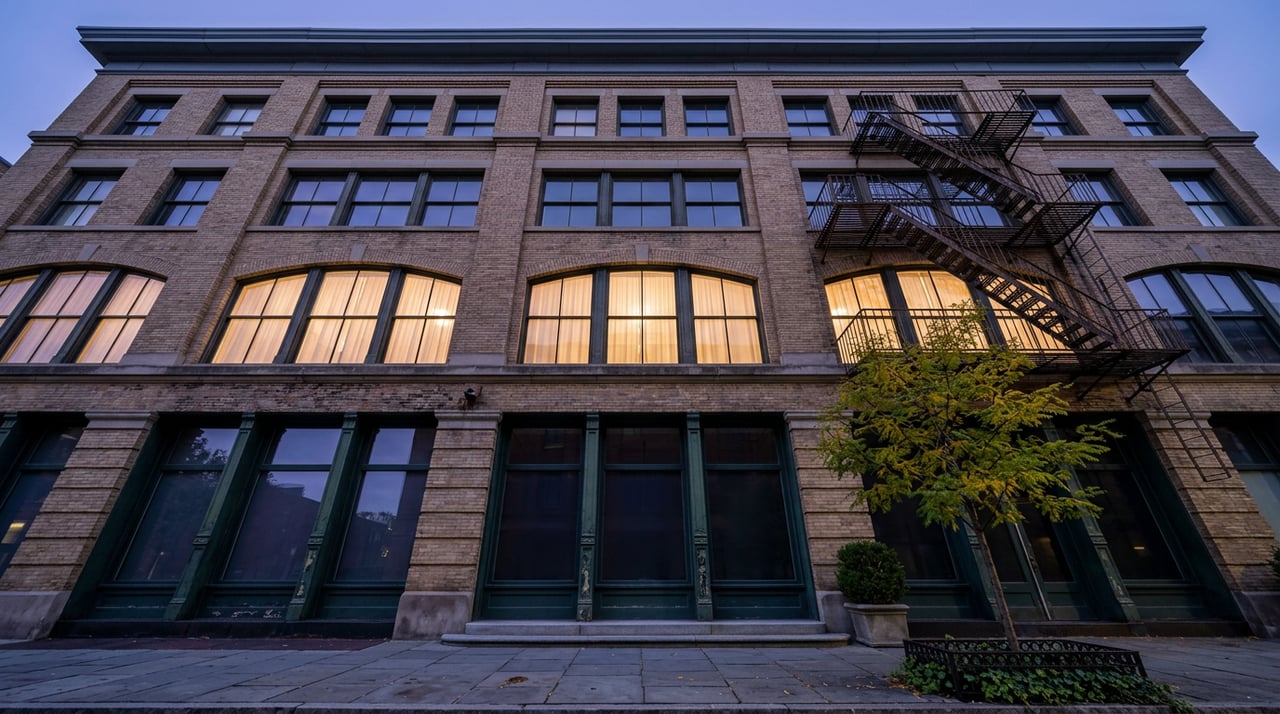
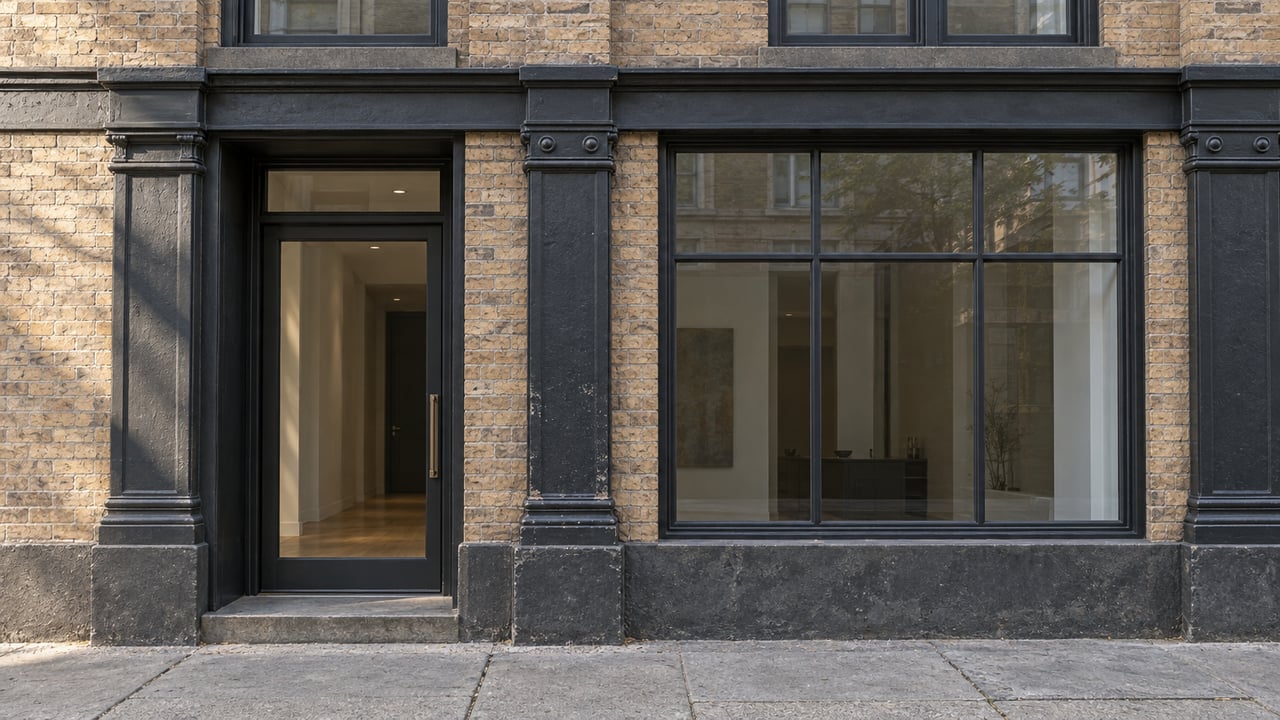
Walk west on Spring Street toward Broadway this week and the corner still reads the way it always has: scaffolding shrugged over a limestone base, a run of cast-iron columns holding up six stories of history, foot traffic thick enough that nobody bothers to check the crosswalk signal. What has changed is what's happening inside that building, and inside half a dozen others within a ten-minute walk of it. SoHo isn't just getting new stores this fall. It's getting smaller ones, in buildings that used to hold one big idea and now hold several modest ones.
That's the pattern worth naming, because it cuts against the instinct to read "new flagship" as "bigger flagship." The five most talked-about openings on these blocks in 2026 all point the other way.
The corner that used to be one big idea
The building at 529 Broadway, at the corner of Spring Street, has been a Nike showcase for years, the kind of address where a new signature sneaker got the billboard-scale window treatment. That run is ending. Ingka Investments, the property arm behind IKEA, bought the 53,000-square-foot building and is converting it into something the block hasn't seen before: a single address split between two uses. IKEA takes the first two floors, about 25,000 square feet, as its second Manhattan location. The four floors above become office space.
The IKEA piece alone is a departure from how the brand usually shows up in New York. It won't resemble the 336,000-square-foot warehouse in Red Hook or the 227,000-square-foot store in Hicksville. Company leadership has described the format as built for people who shop on foot, between errands, not for a car trip to the outer boroughs. It's a storefront-sized bet in a warehouse-brand's playbook.
Nike, meanwhile, didn't wait around for the renovation to finish. The flagship at 529 Broadway closed, and the brand opened a stopgap location three blocks south at 611 Broadway starting in April. That temporary space mirrors the athlete-focused design of Nike's Midtown House of Innovation, but at a fraction of the footprint, and there's no confirmed timeline for whether Nike returns to SoHo in a permanent way once the building's renovation wraps. For now, the single-retailer showcase that corner used to represent has split into three smaller stories: a temporary Nike, a future IKEA, and four floors of office tenants who haven't been named yet.
A tenth of the size, with Madonna at the door
A few blocks over, at 430 West Broadway, Kiko Milano opened its first permanent New York City store in more than a decade on September 5. The Italian cosmetics brand's return to the city comes with a notable face attached: Madonna is the brand ambassador for the launch, and the company brought in Italian archways, lilac tones, and Milanese stainless steel details for the build-out. But the number that matters more than the celebrity attachment is the square footage. The shop is 1,700 square feet, a boutique, not a big-box statement.
That size is a deliberate choice. Kiko has been explicit about wanting this location to read as a permanent flagship rather than a pop-up, positioning it as a counterpoint to the short-lived beauty activations that have become common around the city, the kind of temporary activation tied to a single week on the fashion calendar. A 1,700-square-foot shop with staying power is a different bet than a splashy temporary takeover, and it's a smaller one than the brand's last major American chapter, which ran 28 U.S. locations before a 2018 bankruptcy filing.
Eighteen years to get one storefront
Victoria Beckham's brand has been showing collections out of New York since 2008. It took until this fall for her to open an actual store in the city. The flagship landed at 150 Mercer Street, and the design leans domestic rather than department-store: a Gio Ponti lantern over the door, Pierre Augustin Rose sofas, brass rails, a layout the brand itself describes as feeling like a New York loft rather than a showroom. Beckham called the opening "a full-circle moment," and the choice of Mercer over a bigger Broadway address fits the same logic running through the other openings this season. The Fall/Winter 2026 collection debuting in the space draws on Tamara de Lempicka's Art Deco lines, and that same tension between structure and warmth shows up in the store's design, in the mix of masculine tailoring cues and soft furnishings.
It's a single-brand boutique on a mid-sized SoHo block, not a multi-level retail statement. After eighteen years of showing in this city without a storefront to match, the format Beckham chose when she finally committed to one was the smaller kind.
Two galleries instead of one bigger one
The clearest version of this pattern isn't even in retail. It's in the art world, on Greene Street. Garth Greenan Gallery, previously operating out of a single Chelsea space at 545 West 20th Street, announced its move into two new locations this fall: 10 Greene Street and 25 Greene Street, both landmarked cast-iron buildings, positioned directly across the street from each other. The combined footprint is more than 4,000 square feet, which triples what the gallery had in Chelsea. But the gallery didn't take one larger space to do that. It took two smaller ones and put them in conversation.
The new SoHo home opened in early September with solo exhibitions by Rosalyn Drexler and Cannupa Hanska Luger, and the gallery has described the split as intentional, meant to let its roster of artists move back and forth across the street rather than compete for wall space inside a single room. Between the announcement in the spring and the September opening, the gallery ran invitation-only shows out of its old space rather than staying dark, which meant the transition overlapped rather than leaving a true gap in its programming.
The smallest opening of the five
Not every new arrival on these blocks needs a headline-grabbing reason for being small. GreenRow, a home-furnishings brand under the Williams-Sonoma umbrella, opened its first-ever physical store at 47 Howard Street back in March, and it's stayed exactly the size it opened at. The company describes the space as designed to feel lived-in rather than like a showroom, stocked with FSC-certified wood furniture, textiles, and a rotating selection of vintage and found pieces alongside its regular product line.
It's the smallest gesture of the group. A single storefront for a brand's very first retail experiment, on a Howard Street block that doesn't get the same foot traffic as Broadway or Mercer, is not a flagship in the traditional sense. It's a trial. And it's been open longer than any of the other four, which suggests the format is working well enough that nobody's rushed to expand it.
What the pattern actually says
None of these five businesses are shrinking their ambitions. Kiko Milano brought in a global icon for a single boutique. Garth Greenan tripled its footprint without doubling down on one big room. IKEA is trying a format it hasn't really tested in Manhattan before. What's changed is the assumption that a SoHo debut has to announce itself at warehouse scale to matter. The block that used to hold one sneaker cathedral now holds a temporary storefront, a future two-floor home-goods shop, and four stories of office space nobody's named yet. The block on Greene Street that used to hold zero Garth Greenan locations now holds two, each smaller than the gallery's old Chelsea home, and each doing something the other can't do alone.
If you're walking these blocks between now and the holidays, that's the thing to actually watch for: not whether SoHo is getting more retail, but whether the next storefront that opens is doing more with less room than the one it replaced.
If you own property on these blocks and you're curious what a shift like this means for the buildings around it, that's a conversation worth having before you assume the answer. The Roya Cohen Team knows this stretch of SoHo down to the storefront, and we're always glad to talk through what's changing on your block specifically.