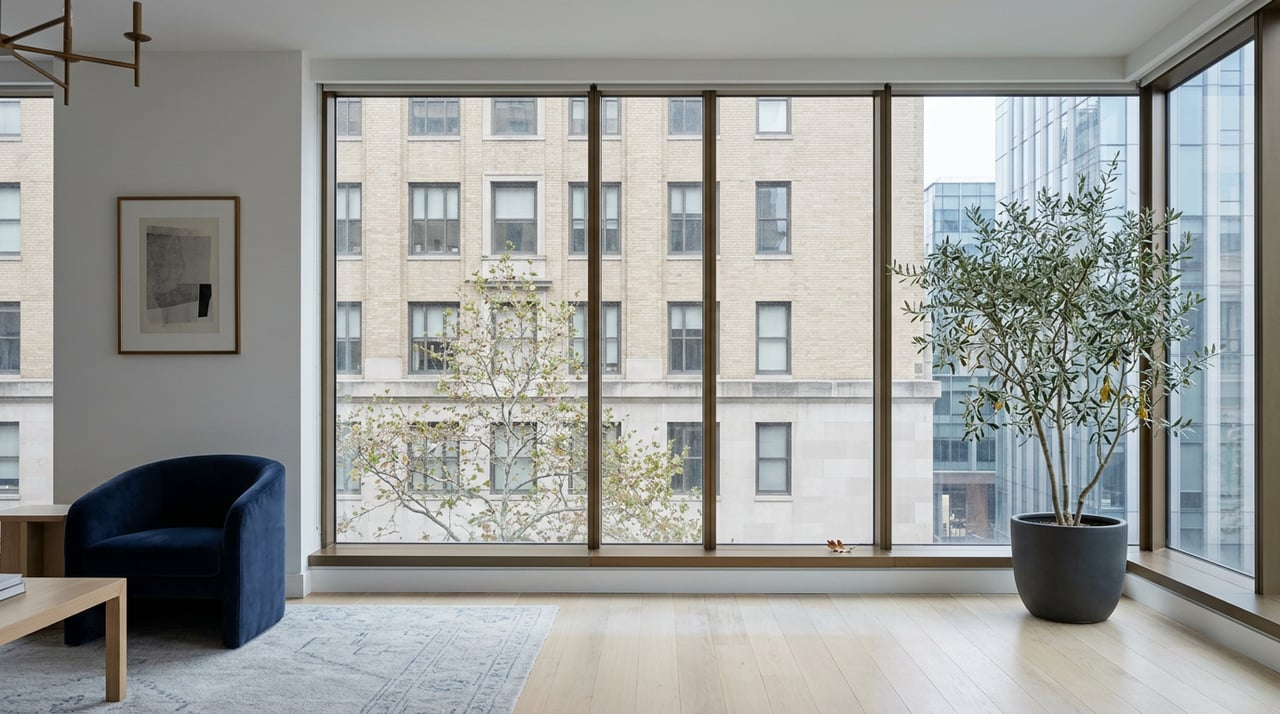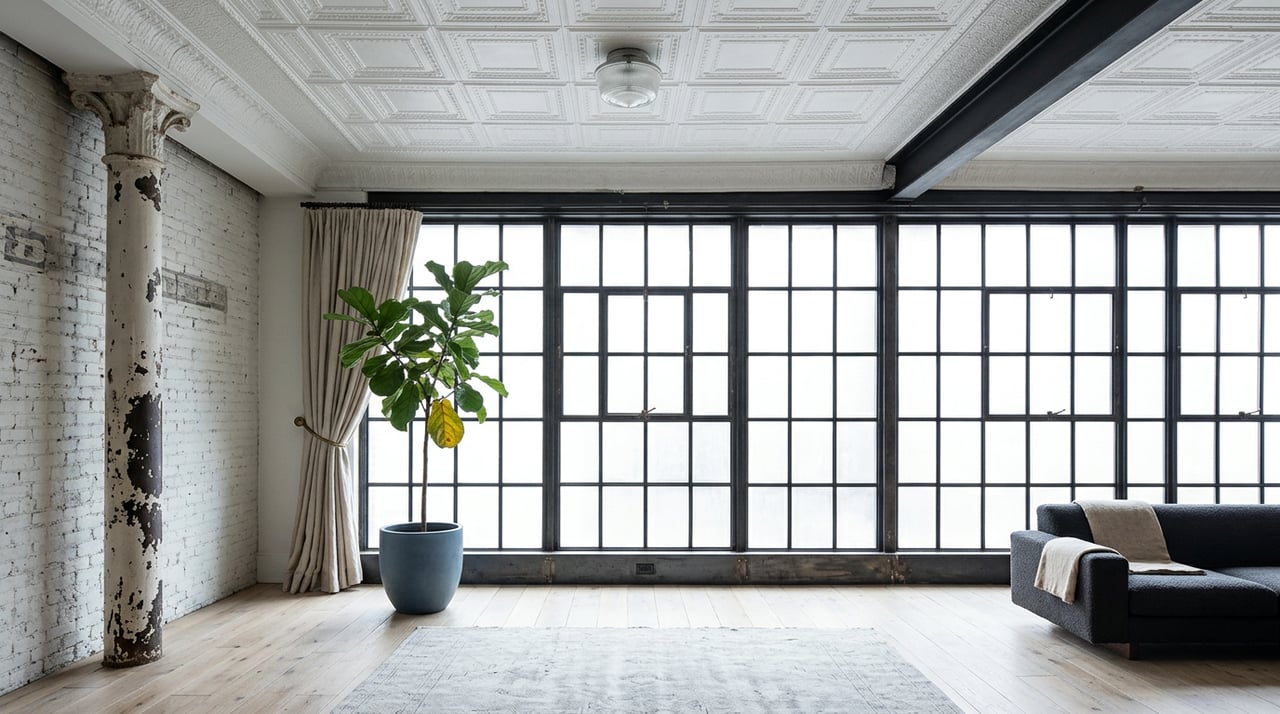
For twenty years, the Artist-in-Residence rule was the thing everyone in SoHo signed around. Buyers acknowledged it, sellers disclosed it, attorneys drafted the letter, and the city rarely asked. That era ended on January 13, 2026, and the closing statement for a SoHo loft looks different now.
The change is not the rule itself. It is the price the city has attached to walking away from it, and the fact that a New York court has now said the price is enforceable.
The one-sentence version
If your SoHo loft carries a Joint Living-Work Quarters for Artists designation on its certificate of occupancy, and it is not covered by the Loft Law as an Interim Multiple Dwelling, converting it to unrestricted residential use costs $100 per square foot, to be adjusted annually, paid into a city-administered Arts Fund and recorded with the City Register.
On a 2,500-square-foot loft, that is $250,000. On a 3,800-square-foot full-floor, closer to $380,000. The fee is escalating at roughly 3% per year, and the escalator compounds while you wait.
That number is now a variable in every listing conversation.
What the court actually did
The New York Court of Appeals, in Matter of Coalition for Fairness in Soho & Noho, Inc. v. City of New York, reversed the Appellate Division and upheld the fee in a decision that rejected the Coalition's argument that the fee infringes on the property rights of building owners, tenants, and other residents.
The reasoning is narrower than the headlines suggested. Judge Rivera's majority treated the fee as voluntary, in the sense that it is only triggered when an owner elects to convert. The fee only had to be paid if a person chose to sell or pass on the apartment, and it allowed the loft owners to transform it into a different type of unit, from an artist live-work space into a residential space, so the owner's property interests weren't being imposed upon.
Two things follow from that framing. First, holding a JLWQA loft and continuing to occupy it under existing rules remains free. Second, the moment the loft trades to a non-artist buyer who wants clean residential use, the fee arrives.
That is why the ruling matters more to sellers than to sitters.
The exemption most SoHo owners don't check first
Before pricing the fee into anything, pull the certificate of occupancy and the Loft Board file.
Under a 2023 partial settlement with the City of New York, both current and former Interim Multiple Dwellings are exempt from the requirement of having an artist certification, even if the certificates of occupancy carry such a restriction, and exempt from paying a contribution to an Arts Fund. Owners of former IMDs are not required to convert their units from JLWQA to Residential Use Group 2 or pay the Arts Fund fee, and are free to use them residentially, regardless of an artist certification, as well as sell or transfer them to anyone.
Practically, that means a SoHo loft in a building that went through the Loft Board's registration and legalization process at any point can list as a standard residential unit. No fee. No conversion filing. No board question about certification.
The check is not intuitive. IMD status lives in Loft Board records, not on StreetEasy, and rarely appears in the offering plan without translation. Before you sign a listing agreement, ask three questions in this order:
- Does the certificate of occupancy carry a JLWQA restriction, and what does DOB BIS or DOB NOW show for the building's filing history?
- Is the unit or the building a current or former IMD registered with the NYC Loft Board?
- If the answer to 2 is yes, has the exemption been documented in a form your attorney can attach to the contract?
A yes on question 2 rewrites the entire listing strategy. A no sends you to the next section.
Two pricing paths, and only two
Once you have confirmed the loft is a straight JLWQA unit with no IMD cover, you are choosing between two strategies. There is no third.
Path A: Convert before you list
You pay the Arts Fund fee, record the documentation with the City Register, and receive certification from the Department of City Planning. When the listing goes live, it markets as unrestricted residential.
The argument for Path A is buyer pool. Converting to open residential use removes the artist certification requirement that can limit the pool of potential buyers and tenants. This could expand marketability, may improve financing options, and has the potential to resolve compliance concerns.
That financing point matters. Bank underwriting has been cautious on unconverted JLWQA collateral since 2008, and a converted unit clears one of the standard bank objections before the appraiser walks in.
The argument against Path A is capital. You are writing a six-figure check out of pocket, before you know the sale price, and the money is nonrefundable if the deal falls apart or the market softens further.
Path B: List as JLWQA and let the buyer convert
The fee still gets paid. It just gets paid by someone else, and it gets priced into the offer.
This path works when the buyer is either a certified artist who does not need to convert, an all-cash purchaser willing to absorb the fee for the loft's architecture, or a buyer whose attorney negotiates a purchase price that reflects the conversion cost as a credit.
Where sellers get hurt on Path B is in pricing anchoring. If the ask is set against comparable converted lofts and the JLWQA status is disclosed late, the negotiation collapses into a $250,000 conversation the seller was not prepared to have. Set the number honestly on day one, and the fee becomes a data point the buyer already priced when they signed the offer.
Why waiting is the expensive strategy
There are two open questions that could, in theory, change the fee.
The first is legislative. Christopher Marte, the neighborhood's council member, is looking towards quicker legislative solutions, like introducing a City Council bill that would eliminate or lower the permitting fee, currently at $100 per square foot, set to rise by 3% each year, to a negligible amount.
The second is federal. Pacific Legal Foundation has filed a cert petition asking the U.S. Supreme Court to take the case. A new decision for these over 1,600 SoHo and NoHo residents is well over a year away.
Both are real. Neither is a plan. A seller sitting on a JLWQA loft waiting for one of these outcomes is running a compounding cost against a binary event: the fee rises 3% every year the loft does not sell, and if the ruling holds and the bill dies, that seller has paid the escalator without gaining anything.
The market context does not favor waiting either. Over the three months ending April 2026, SoHo home prices were down 16.9% compared to the same period last year, selling for a median price of $3.2M. On average, homes in SoHo sell after 106 days on the market compared to 63 days last year. The lofts that are trading are trading slower, and the ones with legal complications are the ones sitting.
What to have in the file before you sign a listing agreement
For a JLWQA loft, the pre-listing checklist looks different than a standard Manhattan condo. At minimum:
- Certificate of occupancy, current temporary or permanent, and any pending TCO renewals at DOB
- Loft Board registration file, if applicable, with the IMD number and status letter
- DOB BIS and DOB NOW job history for the unit, showing any Alt-1, Alt-CO, or open permits
- LPC job history for the building, since the Landmarks Preservation Commission states that most exterior changes in historic districts require review and buyers ask
- A written Arts Fund fee estimate from counsel, calculated on the exact square footage that will appear in the offering
- For co-ops: proprietary lease, house rules, board minutes, financials, flip tax, and sublet policy
- For condos: offering plan, declaration, budget, reserve study, and renovation rules
The point of the file is not to reassure the seller. It is to answer, in one email, the six questions a serious buyer's attorney will ask in week two of contract negotiation. Answered up front, those questions do not compress the price. Answered late, they do.
A short FAQ
Does the fee apply if I inherit the loft rather than sell it? The fee applies to the conversion of the unit to unrestricted residential use. A transfer that keeps the JLWQA designation intact does not itself trigger the fee, but the next transaction likely will. Speak with counsel before assuming a transfer avoids the mechanic.
Can a certified artist still buy my loft without triggering the fee? Yes. The JLWQA designation permits occupancy by an artist certified by the NYC Department of Cultural Affairs. In practice, the City asserts that by 2022, an estimated 1,600 out of 1,636 JLWQA-designated units were occupied by non-conforming households and certification volume has been minimal, so the certified-artist buyer pool is thin.
Is the fee negotiable at closing? The Arts Fund amount is set by the Zoning Resolution and paid to the city. It is not a line the parties negotiate with each other. What is negotiable is who writes the check, and how that allocation is reflected in the purchase price.
If you own a SoHo loft and are trying to decide whether to convert, list, or hold, the answer depends on documents most owners have not looked at in years. The Roya Cohen Team works through the JLWQA file, the IMD question, and the pricing math before the listing goes public, so the fee stops being a surprise and starts being a strategy. Request a complimentary market valuation to begin.