By Roya Cohen, Licensed Real Estate Salesperson, Sotheby's International Realty. Reviewed November 2026.
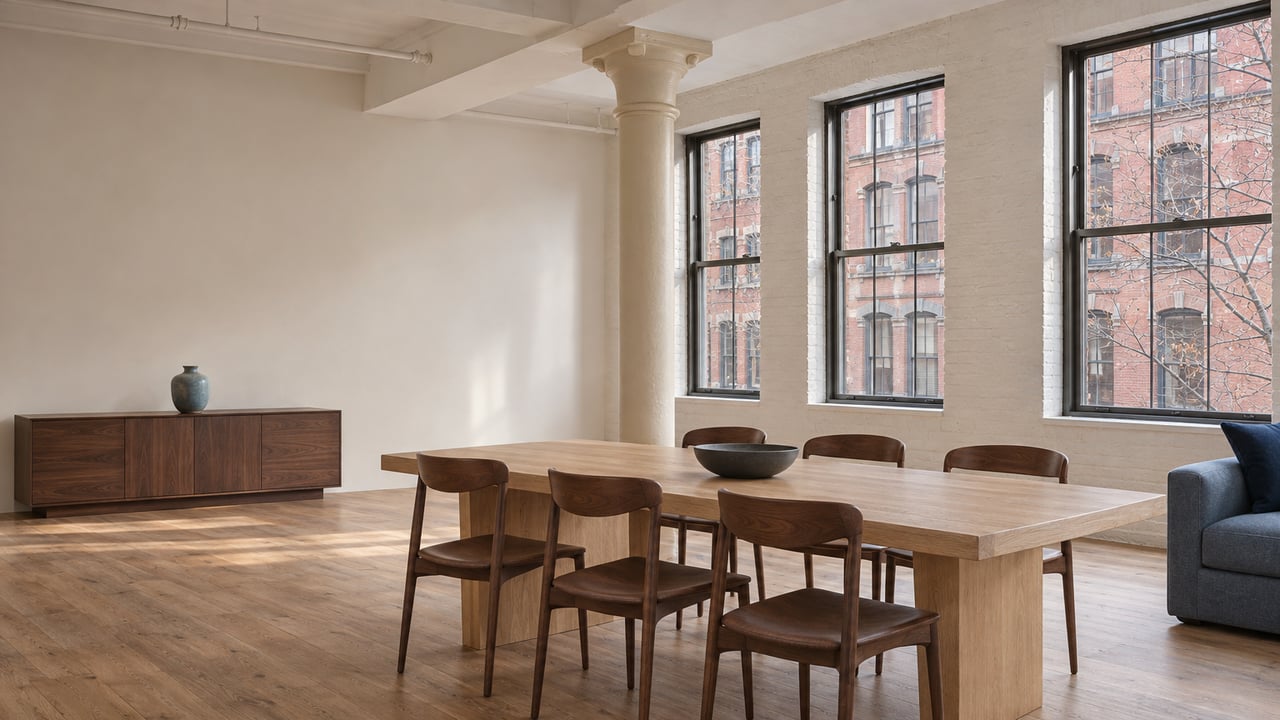
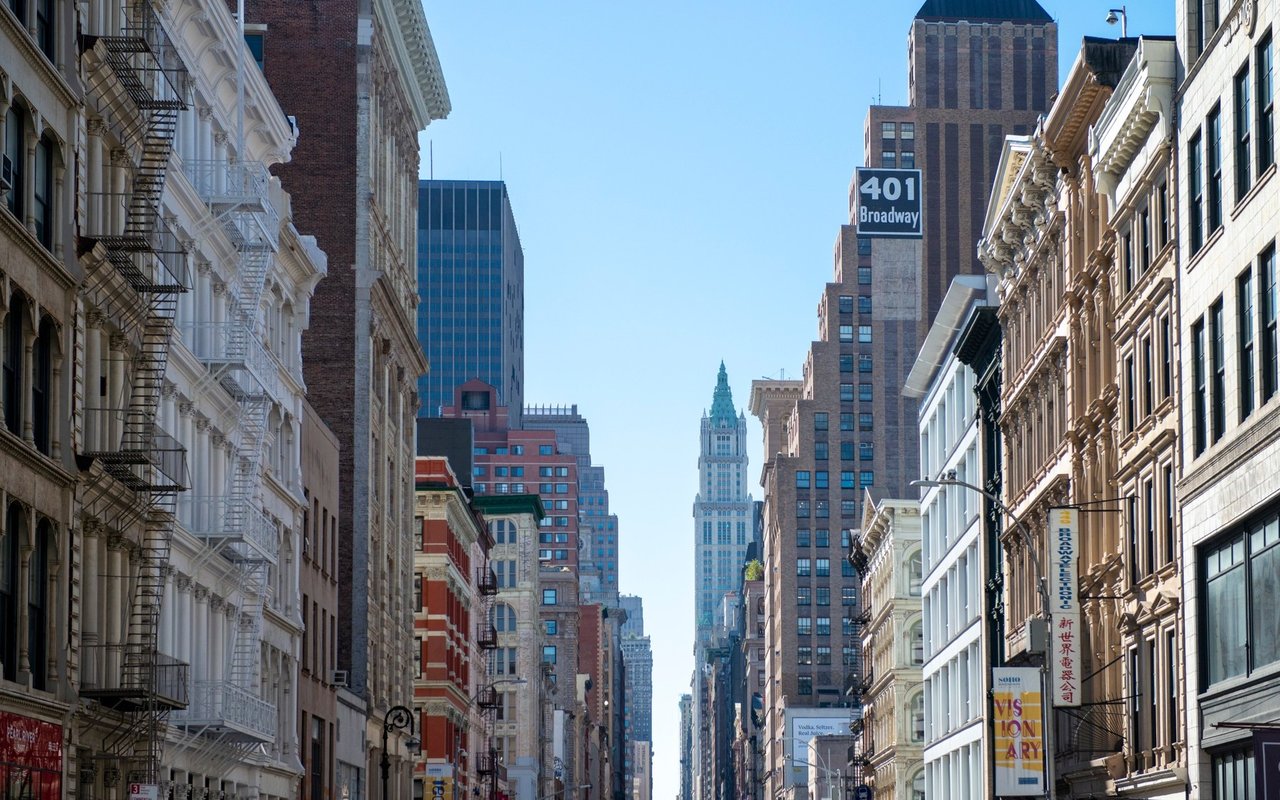
"Loft" is the most elastic word in Manhattan real estate. It can describe a 3,000-square-foot floor-through in a cast-iron SoHo building with a freight elevator and a certificate of occupancy that still says "manufacturing," or a new-construction condo in Chelsea with eleven-foot ceilings and nothing else in common. The price, the financing and even your legal right to live there depend on which kind you are looking at. We have sold lofts at 114 Mercer Street in SoHo twice, along with lofts on West 14th, West 17th, West 30th and Baxter Streets, and the questions below are the ones that decide those deals.
Three kinds of loft
Loft-style apartments. Condos or co-ops that were built or fully converted to residential use and simply have loft proportions: open plans, high ceilings, large windows, exposed columns. Legally they are ordinary apartments. Most "lofts" in Tribeca, Chelsea and the Flatiron District are this kind.
Legalized lofts. Former manufacturing or commercial buildings whose residential use was legalized under New York State's Loft Law (Article 7-C of the Multiple Dwelling Law, enacted in 1982). Buildings that completed the process have a residential certificate of occupancy and are usually co-ops; the Loft Board regulated the conversion, and units that have finished it can be occupied as residences without any special status (NYC Department of Buildings).
JLWQA lofts. In SoHo and NoHo, many lofts are zoned as Joint Living-Work Quarters for Artists, a 1970s use category that legalized artists living in manufacturing buildings. A JLWQA unit may lawfully be occupied by an artist certified by the Department of Cultural Affairs, by the artist's household, or by others entitled to occupancy under another provision of law (NYC Department of Buildings). For decades the rule was loosely enforced and widely ignored. That changed in 2021.
What the 2021 SoHo/NoHo rezoning did
On December 15, 2021, the City Council adopted the SoHo/NoHo Neighborhood Plan, creating the Special SoHo-NoHo Mixed Use District. For loft buyers, three things matter (NYC Department of City Planning):
- Residential use is now permitted as of right in the district, so new conversions and new buildings can be ordinary apartments.
- No new JLWQA units can be created, and existing JLWQA units keep their artist-occupancy restriction unless converted.
- Owners can convert a JLWQA unit to unrestricted residential use by paying a one-time contribution to the SoHo/NoHo Arts Fund, set at $100 per square foot of converted floor area and adjusted for inflation, and completing a Department of Buildings filing. Until conversion, a unit remains JLWQA.
In 2022 the State added a safety valve: anyone who was already living in a JLWQA unit on or before December 15, 2021 is treated as a lawful occupant with the same rights as a certified artist. Anyone who moved in after that date is subject to the artist requirement unless the unit is converted (New York Court of Appeals, January 2026). In January 2026 the Court of Appeals upheld the conversion fee against a challenge by loft owners, which means the $100-per-square-foot number is now settled law. We covered the decision and who typically pays the fee in two earlier posts.
The practical effect for buyers: a 2,500-square-foot JLWQA loft carries a potential $250,000-plus conversion cost (more after inflation adjustments) that a buyer who is not a certified artist must either pay, negotiate into the price, or accept the legal risk of living without. Sellers of converted units can and should market the conversion as a completed asset.
Questions to ask before you offer on any loft
- What does the certificate of occupancy say? Residential, JLWQA (Use Group 17D), or something else. Your attorney should pull it.
- Is the building a co-op, a condo or a Loft Law building still under Loft Board jurisdiction? Each has different financing and resale implications.
- If JLWQA, has the unit been converted? If not, what would the Arts Fund fee be at today's rate, and who pays it?
- Is the unit on a lender's approved list? Many lenders will not finance unconverted JLWQA units or buildings without a residential CO. Loft financing is often 20 to 25 percent down with a lender familiar with the building.
- What are the mechanicals? Lofts in older buildings may have limited electrical service, sprinkler requirements, or shared heating. Ask what the last three sales in the building disclosed.
- Is there a freight elevator, and what are the move-in rules?
Pricing a loft
Lofts are priced on volume as much as floor area. Ceiling height, window count, light exposure and the width of the floor plate move price per square foot more than in conventional apartments. Floor-through units on a single level command a premium over the same square footage split across two. In SoHo, a unit with a completed JLWQA conversion or a clean residential CO sells at a visible premium to an unconverted one, because it opens the apartment to every buyer and every lender.
Our own SoHo sales at 114 Mercer Street, a cast-iron co-op in the heart of the historic district, closed at $3,495,000 and $3,500,000 in 2017 and $3,100,000 in 2026. The 2026 sale took place after the rezoning and the Court of Appeals decision, which is to say in a market that now prices paperwork explicitly.
Where the lofts are
SoHo and NoHo: the original cast-iron lofts, many co-ops, many JLWQA. Tribeca: larger floor plates, more condos, fewer artist restrictions. Chelsea and the Flatiron District: former warehouses and showrooms, mostly condos and legalized co-ops; our sales at 130 West 30th Street (a penthouse at $3,850,000), 15 West 17th Street and 133 West 14th Street are this type. Nolita and the Lower East Side: smaller buildings, more variation in legal status; our sales at 123 and 136 Baxter Street fall here. Further north, true lofts are rare; the Upper West Side has a handful of converted institutional buildings and almost no manufacturing stock.
Is a loft right for you?
Buy a loft if you value space, light and character over a conventional layout, you can accept a shared freight elevator and an older building's quirks, and you are prepared to understand the legal status before you fall in love. Avoid one if you need standard financing with a small down payment, or if you cannot resolve the occupancy question to your attorney's satisfaction.
Considering a downtown loft? Call 646.599.7686 or request a consultation. We will tell you what the certificate of occupancy means for your purchase before you make an offer.
Frequently asked questions
What is a JLWQA loft?
A unit in SoHo or NoHo zoned as Joint Living-Work Quarters for Artists. Lawful occupancy is limited to artists certified by the Department of Cultural Affairs, their households, and others entitled by law, unless the unit is converted to residential use.
Can a non-artist buy a SoHo loft?
Yes. Anyone can buy a JLWQA unit, but lawful occupancy by a non-artist who moved in after December 15, 2021 generally requires converting the unit, which involves a one-time fee to the SoHo/NoHo Arts Fund of $100 per square foot, adjusted for inflation.
What is the Loft Law?
Article 7-C of New York's Multiple Dwelling Law, enacted in 1982, which created a path to legalize residential occupancy in former commercial and manufacturing buildings under the supervision of the New York City Loft Board.
Did the 2021 SoHo/NoHo rezoning eliminate artist requirements?
No. It allowed new residential use as of right, stopped the creation of new JLWQA units, and created a paid conversion path for existing ones. Unconverted units keep the artist-occupancy restriction.
Are lofts harder to finance?
Often. Lenders may require a residential certificate of occupancy or a completed JLWQA conversion, and many want 20 to 25 percent down. Working with a lender who has closed in the building helps.
Why are lofts priced differently from regular apartments?
Buyers pay for volume, light and floor-plate width, not just square footage. Legal status also matters: a converted or residential-CO loft trades at a premium to an unconverted JLWQA unit.
Related guides
- The court ruling that put a price on SoHo loft paperwork
- The SoHo loft sale's new line item: who pays it
- Co-op vs condo: the real cost comparison
- Our sold portfolio
- Search Manhattan homes for sale
Sources
- NYC Department of Buildings, Converting from JLWQA to Residential Use: https://www.nyc.gov/site/buildings/property-or-business-owner/converting-from-jlwqa.page
- NYC Department of City Planning, SoHo/NoHo Neighborhood Plan: https://www.nyc.gov/content/planning/pages/our-work/plans/manhattan/soho-noho-neighborhood-plan
- New York Court of Appeals, Matter of Coalition for Fairness in SoHo & NoHo v. City of New York (2026): https://nycourts.gov/reporter/3dseries/2026/2026_00076.htm
- NYC Department of Buildings, Buildings Bulletin 2023-018: https://www.nyc.gov/assets/buildings/bldgs_bulletins/bb_2023-018.pdf
- The Roya Cohen Team closed-sale records, 2004–2026